
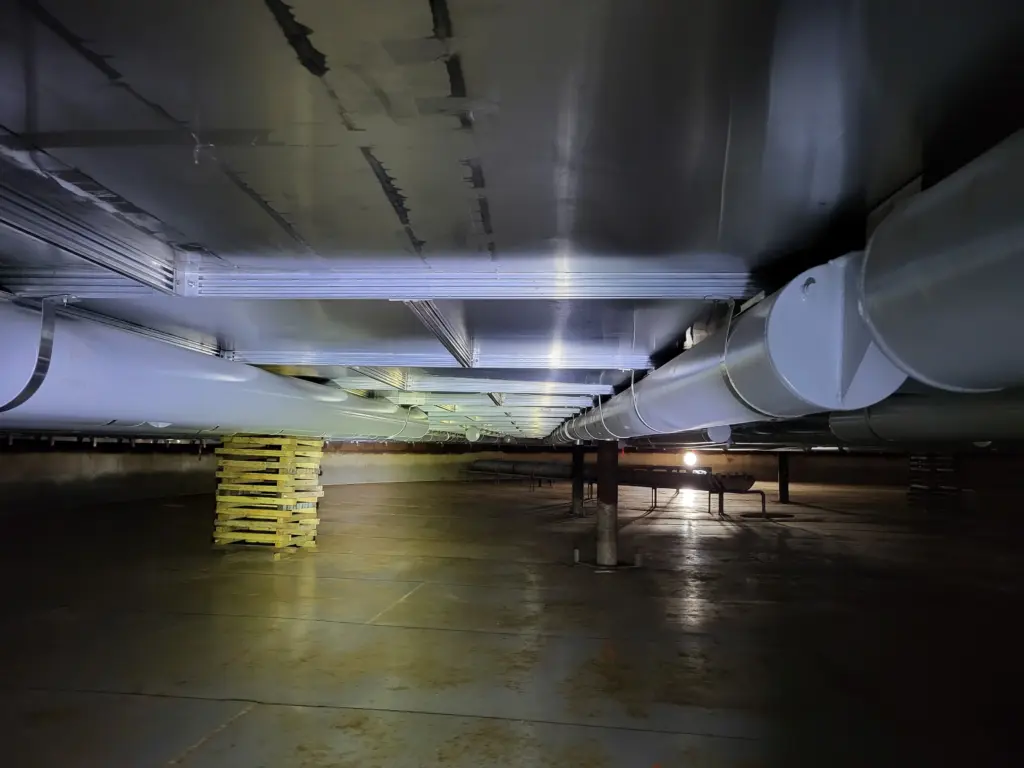

Skin & Pontoon Aluminum Internal Floating Roof Systems
Overview
Constructed using lightweight aluminum panels supported by buoyant pontoon
chambers, these systems float directly on the stored product surface, minimising
emissions while maintaining structural stability across varying operating conditions.
DirecTank supplies and integrates skin and pontoon internal floating roof systems
suitable for a wide range of tank diameters, stored products, and environmental
conditions. Configurations are available to support new installations and retrofit
applications.
Design & Construction
Skin and pontoon aluminum internal floating roof systems are engineered for
durability, flexibility, and compatibility with rim sealing systems.
- Key design considerations include:
- Lightweight aluminum deck panels supported by buoyant pontoon chambers
- Options for leg-supported or cable-suspended configurations
- Aluminum, hybrid aluminum-stainless, and all-stainless steel material options
- Modular construction to facilitate efficient installation
- Compatibility with mechanical shoe or wiper primary seals
- Designed to accommodate operational loads and dynamic tank conditions
Systems can be specified to meet project-specific structural and
regulatory requirements.
Key Benefits

Reduced vapour emissions
Minimises vapour space within fixed-roof tanks, supporting environmental compliance and emissions control objectives.

Lightweight yet structurally robust
Aluminum construction reduces overall roof weight while maintaining strength and stability.

Installation flexibility
Available in leg-supported and cable-suspended configurations to suit tank geometry and operational requirements.

Compatible with rim seal systems
Designed to operate in conjunction with primary and secondary sealing systems for integrated performance.

Suitable for retrofit applications
Modular construction allows integration into existing fixed-roof tanks.

Durable, low-maintenance design
Corrosion-resistant materials and simplified construction support long service life with minimal intervention.

Applications and Sectors

Petrochemical storage terminals

Fuel and hydrocarbon tank farms

Industrial liquid storage facilities

Tanks requiring emissions reduction and product conservation
Compliance and Standards